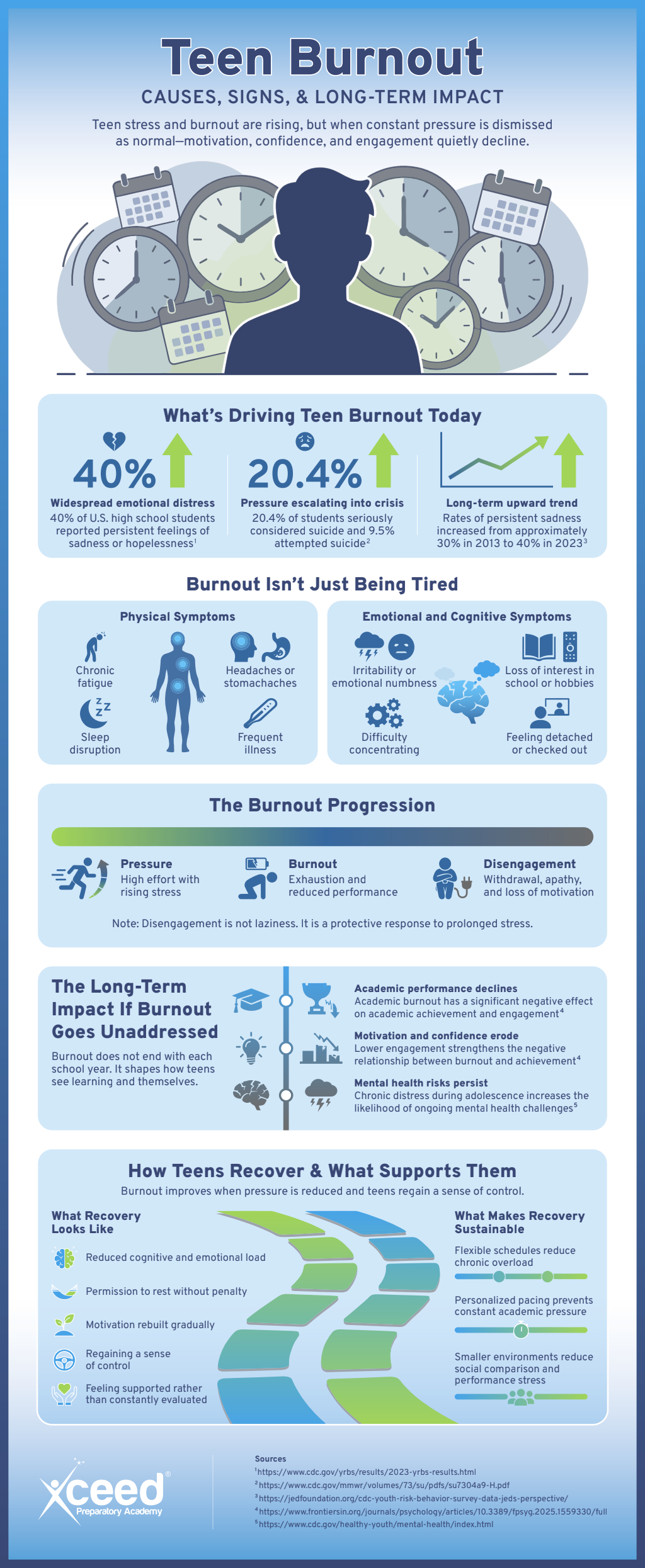










Teen burnout extends beyond the typical stress linked to exams or major events. It represents a persistent state of emotional, mental, and physical exhaustion stemming from continuous pressure without proper recovery time. Adolescents juggle academic expectations, social obligations, and future planning, all while their brains and bodies are still maturing. When these pressures are unrelenting, burnout can set in, potentially impacting long-term health.
Common Contributors to Teen Burnout
Academic pressures are a significant factor contributing to burnout. Heavy workloads, advanced courses, and the demand to achieve high grades can lead to chronic stress. This competition can be intense, with students feeling the pressure to excel in both public and private educational environments.
Another factor is overscheduling. Many teens transition from school to sports, clubs, tutoring, or part-time jobs, often without sufficient time to relax. A busy schedule diminishes chances for rest and reflection, allowing stress to build up.
Social expectations further complicate matters. Social media often exacerbates feelings of comparison and performance anxiety, pushing teens to maintain a flawless persona while navigating peer relationships both online and offline.
Even well-intentioned family expectations can heighten pressure. A teen who feels that love or approval is contingent upon achievement may push themselves beyond healthy limits, leading to a gradual depletion of motivation and joy.
Early Signs of Burnout
Burnout typically unfolds gradually. One of the earliest indicators is emotional exhaustion, manifested through irritability, hopelessness, or feelings of ineffectiveness. Activities that were once enjoyable may start to seem unfulfilling.
Physical symptoms often accompany burnout as well. Common issues include frequent headaches, stomach aches, and altered sleep patterns. Some teens may find it difficult to fall asleep due to racing thoughts, while others might sleep excessively yet still feel fatigued.
Cognitive issues may arise next. Problems with concentration, forgetfulness, and dropping academic performance often indicate mental overload rather than a lack of capability. Additionally, pulling away from friends or family can signal an emotional drain.
Long-Term Effects on Health and Development
If left unaddressed, burnout can influence a teen’s mental health trajectory. Prolonged stress during adolescence is associated with an increased risk of anxiety and depression in young adulthood. A constantly activated stress response system can hinder mood regulation and resilience.
Moreover, motivation may decline. Teens who link effort with exhaustion can disengage from school and future aspirations, creating a pattern that may persist into college and the workforce, thereby hindering personal growth and satisfaction.
There are potential physical health ramifications as well. Extended periods of stress can disrupt sleep, weaken the immune system, and lead to unhealthy coping strategies such as overeating or substance use, influencing long-term health outcomes.
Teen burnout signifies a lack of balance between demands and recovery. Early identification allows families, educators, and health professionals to implement schedule modifications, offer emotional support, and set realistic expectations. Promoting consistent sleep, physical activity, and open lines of communication can help restore equilibrium. Tackling burnout during adolescence is critical for fostering better mental health, healthier coping mechanisms, and overall well-being in the long run.
For additional information on teen burnout, please refer to the resource below.